filtri
No filter selected
Whole range of 9 Power Stations - Batteries - Portable power stations EcoFlow models, offered for sale from € 199.00 , in Prompt Delivery and Free shipping . Purchase directly from AgriEuro with no third parties nor unwanted surpreses: compared to the other online markets, who rely on third dealers (it means no assistance nor warranty), we offer Direct and Complete Assistance, which starts from pre-sales service up to after-sales assistance. The items are directly shipped from our AgriEuro distribution centre. Thus, we are the only online seller providing After-Sales Assistance for the Power Stations - Batteries - Portable power stations EcoFlow products and supplying Spare Parts (you access the exploded drawing once entered your Account).


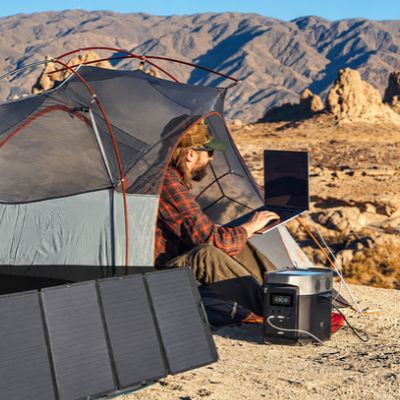
EcoFlow Power Stations are portable energy storage systems designed to power electronic devices, tools and household appliances away from a mains socket or during a power cut. EcoFlow was founded in 2017 by a group of engineers specialising in batteries. Over time, the brand has expanded its range with portable power stations, additional batteries, photovoltaic panels and connected energy solutions.
EcoFlow batteries can be used for camping, motorhome travel, outdoor activities, temporary work sites and home backup. Depending on the model, they can be charged from the mains, a vehicle socket, compatible generators or photovoltaic panels. The different AC, USB and DC ports can power smartphones, computers, lights, small refrigerators and other equipment, provided that the rated output of the power station is observed.
This page also includes the following types of EcoFlow products, designed to create or expand a portable power system:
At AgriEuro, EcoFlow Portable Power Stations can be selected according to their main technical features, helping users find the product best suited to the devices they need to power and the required operating time. The parameters to consider include:
Hobby-level models are suitable for smartphones, laptops, lighting and small devices during camping and leisure activities. Semi-professional units with higher power and capacity can support work equipment, motorhome appliances or selected household loads. The choice must always take continuous power, start-up demand and the expected connection time into account.
The selection includes three product families with complementary functions within a portable power system. Power Stations store and distribute energy; additional batteries expand the available capacity. Photovoltaic panels complete the system with an outdoor charging method that can be used under suitable sunlight conditions.
EcoFlow Portable Power Stations combine a battery, inverter, control system and connection ports in a single transportable unit. They are suitable for powering electronic equipment during camping, motorhome travel, temporary work or mains power cuts. Models differ in capacity, output power, number of sockets, weight and charging speed. Compact units prioritise mobility and reduced dimensions, making them suitable for phones, computers, lights and small refrigerators. Higher-capacity models can support several devices at the same time, provided that the total load remains within the rated output. Some power stations use LFP cells, support additional batteries and allow their parameters to be controlled through an app. Before purchasing, users should compare consumption in watts, required energy in watt-hours and the possible peak demand of the appliances to be connected.
The main elements to consider for this type include:
Additional Batteries for EcoFlow Power Stations increase the energy that compatible units can store and extend the time available before recharging. This configuration is useful when powering portable refrigerators, communication devices, lighting or work equipment for extended periods. The expansion keeps the main module, which contains the inverter and sockets, separate from one or more dedicated storage modules. The number of batteries that can be connected and the total capacity depend on the chosen EcoFlow series. Not every additional battery can be paired with every Power Station, so compatibility, connectors and declared limits must be checked carefully. The connection must be made using the specified cables and according to the instructions for the model. An expandable configuration also makes it possible to start with the capacity currently required and add a compatible module when the duration or intensity of use changes.
Before choosing an additional battery, check the following:
EcoFlow Photovoltaic Panels convert solar radiation into electricity that can recharge compatible Power Stations. Portable models can be folded and transported together with the power station, making them useful for camping, motorhomes and stays away from the mains. The rated output of the panel must remain within the voltage, current and power limits accepted by the solar input of the Power Station. Actual production changes according to solar radiation, orientation, inclination, temperature and shading. A correctly positioned panel, with its surface facing the sunlight and free from obstructions, provides a higher output than a partially shaded module. The required connector and cable must also be checked. A higher-output panel can be selected for shorter charging times, provided that it remains within the specifications of the connected unit.
The main selection criteria include:
AgriEuro offers a selection of EcoFlow Power Stations, additional batteries and photovoltaic panels accompanied by detailed technical specifications. Comparing capacity, power, connections and accessories helps users find a configuration suited to their equipment and desired operating time.
Purchase the most suitable EcoFlow Power Station from AgriEuro and complete the system with compatible additional batteries and photovoltaic panels.
Capacity should be chosen by calculating the energy required by the appliances over the expected operating period. Multiply consumption in watts by the number of operating hours to obtain an estimate in Wh. A margin should be added for conversion losses and any additional loads. For example, a 1,000 Wh power station does not deliver that entire value through its AC sockets because the inverter and electronics consume part of the energy. A limited capacity may be sufficient for small devices; refrigerators, tools and household appliances require higher values.
An EcoFlow Power Station can supply devices compatible with its ports and available output. Smartphones, tablets, computers, lighting, small refrigerators and camping appliances are among the most common applications. For tools, household appliances or motor-driven equipment, both the continuous power and the peak required at start-up must be checked. The combined consumption of simultaneously connected devices must remain below the rated output of the power station. Voltage, frequency and socket type must also correspond to the appliance specifications.
The approximate operating time is calculated by dividing the energy actually available in Wh by the total consumption of the appliances in watts. The result provides an estimate of the operating hours. Actual duration can change due to the inverter, temperature, battery condition and variations in consumption. A 100 W appliance connected to a power station with approximately 800 Wh of usable energy could operate for around eight hours. Appliances that switch a compressor on and off require a calculation based on average consumption.
Charging methods depend on the model and may include a mains socket, vehicle connection, photovoltaic panels, compatible generators and combined charging. The mains normally provides predictable charging times; solar charging varies according to panel output, solar radiation and environmental conditions. Charging from a vehicle requires a compatible socket and cable. Before combining several sources, check whether the Power Station supports the configuration and which inputs can be used simultaneously. Power, voltage and current must always remain within the limits stated in the technical specifications.
An additional battery increases the total capacity of the system and extends the operating time of connected appliances. It does not replace the main Power Station, because the central module normally contains the inverter, controls and output ports. Expansion is useful for home backup, extended stays in a motorhome or activities away from the mains. Each additional battery is only compatible with certain series and may require a dedicated cable. Before purchasing, check the model, maximum expandable capacity and number of supported modules.
The panel must comply with the voltage, current and power accepted by the solar input of the Power Station. A higher rated output can reduce charging times under favourable conditions, but it must not exceed the declared electrical limits. The connector, cable and series or parallel configuration specified by the manufacturer must also be checked. Foldable models are practical for travel; compatible rigid panels may be considered for permanent installations. Actual production remains dependent on solar radiation, inclination, orientation, temperature and shading.
Many models can power devices while charging, but operation varies according to the power station and connected source. If output power exceeds input power, the battery level continues to fall. Some functions, operating modes or power levels may be limited while energy is passing through the unit. The manual for the model must therefore be checked and the limits of each port observed. For sensitive loads, users should also verify the presence of a dedicated switching function and its intervention time.
EcoFlow Power Stations can be used for camping and in motorhomes by choosing a capacity, weight and output suited to the appliances being powered. A compact model can support phones, computers, lights and small refrigerators; higher consumption requires a larger power station. Charging through a photovoltaic panel can extend operating time when exposure and available output are adequate. The unit must be placed in a ventilated, dry and protected position. Before travelling, check its dimensions, cables, available sockets and total consumption.
The Power Station should be switched off, disconnected and stored in a dry, ventilated place away from water and heat sources. For extended periods, follow the charge level and inspection intervals stated in the manual for the model. EcoFlow instructions for several series often specify discharging to around 30% and then recharging to 60% every three months. Excessively high or low temperatures can affect the battery. Clean the product with a soft, dry cloth without aggressive liquids.
Some EcoFlow models have a switching function that keeps certain appliances powered when the mains supply is interrupted. Switching time and available output vary between units. For computers, medical equipment or sensitive loads, check that the power station specifications meet the device requirements. The total load must remain within the rated output, and operating time depends on the remaining capacity. Connection to household circuits requires suitable equipment and installation by qualified personnel.
To change language, please click on the following abbreviations: