filtri
No filter selected
Our range 2026 of Docma with 53 models available and offered for sale from € 14.99 , in Prompt Delivery and Free shipping. Purchase directly from AgriEuro with no third parties nor unwanted surpreses: compared to the other online markets, who rely on third dealers (it means no assistance nor warranty), we offer Direct and Complete Assistance, which starts from pre-sales service up to after-sales assistance. The items are directly shipped from our AgriEuro distribution centre. Thus, we are the only online seller providing After-Sales Assistance for the Docma products and supplying Spare Parts (you access the exploded drawing once entered your Account).


Docma S.r.l. designs and manufactures machinery for the agroforestry and industrial sectors at its headquarters in San Giovanni Lupatoto, in the province of Verona. The founding partners have gained over twenty years of experience in the industry, developing a range dedicated to the main wood cutting, splitting and handling operations. Production includes saw benches, log splitters and winches for private users, agricultural operators and forestry professionals. Over the years, Docma has expanded its range with configurations suited to different operating conditions, while maintaining a clear specialisation in wood processing.
The brand's manufacturing philosophy places particular importance on the safety, functionality and reliability of its machines. Each unit undergoes inspections during the various production stages, with the aim of reducing defects and operating irregularities. Technical research follows developments in agroforestry activities and operators' requirements. This approach is supported by a structured sales and service network dedicated to supplying machinery and resolving technical issues. Saw benches are designed for the orderly preparation of firewood; log splitters cover different power sources. The range of winches includes direct-pull forestry solutions and drum models for controlled log hauling.
The AgriEuro catalogue includes a selection of Docma machinery for agroforestry work, designed for processing and handling wood during different operating stages. The available features make it possible to identify suitable equipment for preparing firewood, splitting logs and recovering timber.
This selection also includes the following types of Docma products, described in greater detail in the sections below:
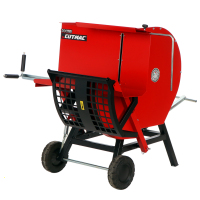
At AgriEuro, Docma saw benches can be selected according to blade diameter, power and cutting capacity. These machines cut logs and branches to length for stoves, fireplaces and wood-fired boilers. Their stable construction and protective devices support consistent cuts during domestic, agricultural or semi-professional work.
The main elements to consider help identify a machine suited to the diameter and quantity of wood to be processed:
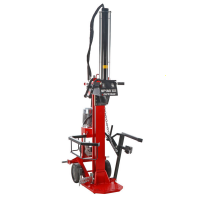
At AgriEuro, Docma log splitters can be selected according to splitting force, power source and log size. Electric versions are suitable for work close to a domestic power supply. Petrol models provide greater independence; tractor-mounted machines meet the demands of more continuous agricultural and forestry work.
The choice can be guided by three characteristics related to the amount of wood and frequency of operation:
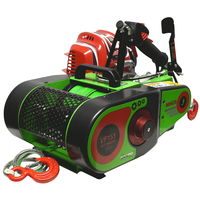
At AgriEuro, Docma winches can be selected according to pulling force, rope type and traction system. Forestry models make it possible to recover logs from slopes or hard-to-reach locations. Direct-pull and drum configurations meet different requirements for distances, loads and operating methods.
Models should be compared by considering the actual load, rope path and ground conditions:
Purchasing a Docma machine from AgriEuro combines product selection with an organised network of logistics and technical services. Support continues after delivery through dedicated assistance and compatible component ordering tools.
The main advantages cover every stage, from shipping the machine to service after purchase:
Explore the Docma selection and identify the right machine for the work planned. Purchase the model best suited to the type of wood, operating environment and frequency of work from AgriEuro now.
The choice depends on the stage of processing required. A saw bench cuts logs and branches to the length required for stoves, fireplaces or boilers. A log splitter separates logs along the grain, reducing their cross-section. A forestry winch is used to haul or recover timber located away from the collection point. A complete working cycle may require several machines, each selected according to the log diameters, amount of wood and ground conditions.
The splitting force must be matched to the size and density of the logs. Diameter, length, wood hardness, knots and irregular grain can increase the force required. Occasional work on regular logs has different requirements from continuous splitting of hardwood species. The tonnage rating must therefore be considered together with piston stroke, declared capacity and the manufacturer's instructions. An appropriate margin over the normal workload should be maintained without exceeding the limits stated in the manual.
An electric log splitter is suitable for work close to a compatible socket and offers straightforward starting with lower noise levels. A petrol model allows operation away from mains electricity and is suitable for frequent outdoor work. A tractor-mounted log splitter is intended for farms and forestry operations with a compatible tractor. The choice should take into account available power, working continuity, transport options and the connection requirements stated in the technical data.
Both can be processed, but the log responds differently depending on wood species, moisture and grain structure. Green wood may separate easily when it has a regular grain, although some logs can be elastic and resistant. Seasoned wood is more rigid and may require greater pressure, particularly when knots are present. The log should be positioned according to the machine instructions, and operation should stop if the wedge encounters abnormal resistance. The dimensional and operating limits specified by the manufacturer must always be observed.
A saw bench should be selected according to the maximum log diameter and the amount of firewood to be prepared. Blade diameter determines cutting capacity; power affects continuity during more demanding work. Frame stability, support design, ease of transport and protective devices are also relevant. For repeated cuts, it is advisable to assess a model with solid support and a power source suited to the workplace. The blade must have dimensions and specifications compatible with the machine.
The log saw must be placed on a level, stable surface free from obstacles. Guards, safety devices and controls must be intact before starting. The log must be positioned correctly on the support without bringing hands close to the blade or moving parts. The personal protective equipment specified in the manual is required, including hearing protection and safety glasses where indicated. Cleaning, adjustments and blade replacement require the machine to be stopped and disconnected from its power source. Incompatible or damaged blades must not be used.
Pulling force does not depend solely on the weight of the log. It is also necessary to consider slope, ground friction, obstacles, pulling direction and rope arrangement. The rated value in the technical data must be compared with the actual load and the most demanding expected conditions. Ropes, hooks, pulleys and anchoring systems must have capacities compatible with the winch. For complex assessments or professional work, the manufacturer's technical instructions and the procedures established for forestry sites should be followed.
With a direct-pull system, the rope passes through the traction mechanism and continues without being stored entirely inside the machine. This configuration can be suitable for routes requiring a long rope. With a drum winch, the cable is wound and collected around the drum during recovery. The choice depends on distance, working frequency, transportable weight and positioning method. With both configurations, the rope must be inspected periodically and operated within the values specified by the manufacturer.
A winch designed for pulling must not automatically be considered suitable for vertical lifting. Pulling and lifting require different devices, brakes, safety factors and certifications. A model must only be employed for operations expressly permitted by its manufacturer. The manual should be read before work begins and the machine's declared purpose must be checked. Lifting people or using accessories without a compatible load rating is not permitted. When in doubt, the configuration should be assessed by qualified personnel.
Maintenance varies according to the machine and its power source, but always begins with cleaning, inspection and compliance with the intervals specified in the manual. Saw benches require sawdust and debris to be removed and the blade, guards and connections to be checked. On log splitters, the hydraulic circuit, wedge, hoses and moving parts should be inspected. Winch ropes, hooks, drums, rope guides and anchoring points require attention. Worn or damaged components must be replaced with compatible spare parts before work resumes.
To change language, please click on the following abbreviations: