Recommendations for use
To ensure maximum durability and efficiency of the machine, the following instructions must be strictly observed. Failure to do so constitutes improper use, with a serious risk of damage to the product (such damage is not covered by the warranty).
- Tank maintenance and condensate drainage: Moisture contained in the intake air accumulates as condensate at the bottom of the tank, due to the thermal processes generated during compression. Drain the condensate after each use by operating the lower drain valve, turning it carefully to avoid sudden discharges of compressed air and liquid. Failure to carry out this maintenance task may lead to internal corrosion of the tank. Furthermore, condensate accumulation reduces the effective air volume, causing abnormal motor restart cycles and the transfer of impurities to connected tools, with the resulting risk of premature damage to the entire system.
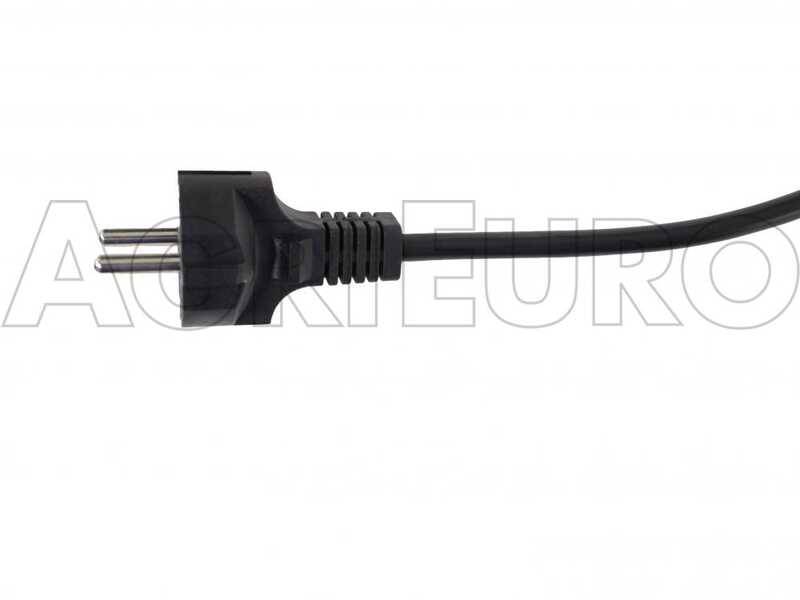
- Suitability of extension leads: Do not use unsuitable extension leads. Given the high motor power, it is essential to ensure a constant power supply. Undersized cabling causes voltage drops that prevent the motor from reaching the correct speed, leading to abnormal overheating and permanent damage to electrical components. Use only cables with a minimum cross-section of 2.5 mm². This cross-section is necessary to handle the high current absorption, especially during start-up.
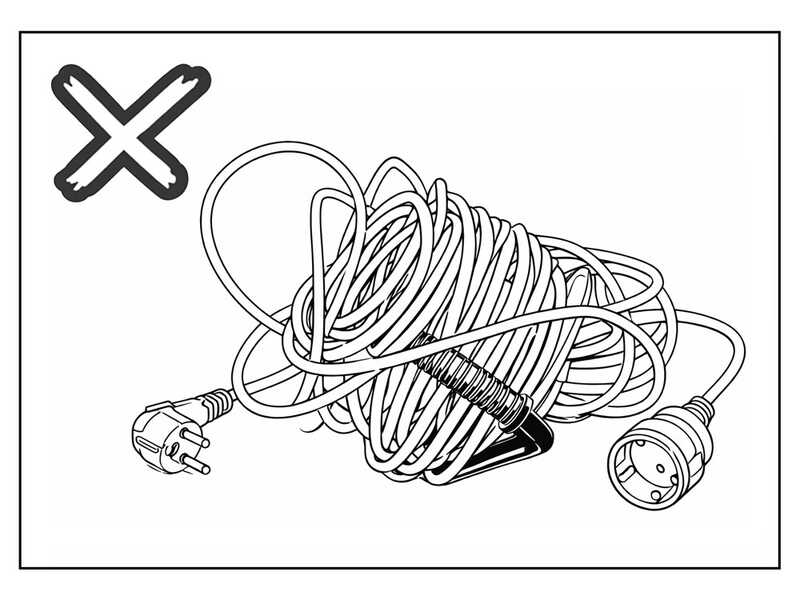
Unwind the extension lead completely before use. Never use the machine if the power cable is partially coiled or bunched up. Heat build-up due to induction can melt the cable and cause serious electrical damage to the motor or a fire hazard.
- Operating position: The air compressor must only be installed in environments free from humidity, preferably in dry locations that are fully protected from weather exposure and potential water splashes. Adequate ventilation must be ensured by maintaining a clearance of at least 50 cm between the machine and any wall or obstacle, in order to allow for proper air circulation and effective heat dissipation. The installation area must also guarantee a high level of air cleanliness and be free from dust, fumes, chemical vapours, or flammable gases. Failure to comply with these requirements exposes the product to the following risks:
- Critical overheating: insufficient ventilation or installation in confined spaces impairs the cooling of the motor and pump assembly, resulting in reduced service life.
- Safety risks: the presence of volatile or flammable substances may compromise the structural integrity of the machine or the safety of the operator.
- Obstruction of cooling and ventilation systems: During machine operation, the air compressor must not be covered with sheets, boxes or makeshift casings, as such barriers prevent the air flow required for cooling the internal components. Blocking the ventilation slots causes a rapid rise in operating temperature, with the consequent risk of irreversible damage to the motor and the seals of the pumping unit. If protective covers are used during periods of inactivity, these must be completely removed before any start-up attempt to ensure the full efficiency of the heat dissipation system, thus preventing critical overheating.
- Power supply and connections suitability: The air compressor must be connected exclusively to an electrical socket rated for the motor’s nominal power. Avoid using unsuitable sockets or connections located too far from the main electrical system. Failure to comply with these requirements exposes the machine to insufficient voltage conditions, seriously compromising the start-up phase, causing start-up difficulties, abnormal stresses and the sudden tripping of protective devices (circuit breakers or residual-current devices).
- Shutdown procedure and static pressure management: It is recommended not to leave the tank pressurised during periods of inactivity. After switching off (OFF position), the residual pressure must be released and the drain valve opened, leaving the tank empty in order to promote the evaporation of internal moisture. Maintaining constant pressure, in fact, promotes condensation build-up and accelerates the deterioration of pneumatic components, such as diaphragms and valves, drastically reducing the overall reliability of the system and its operational life.
- Checking the oil level: Before each use, check the oil level in the pumping unit. The level must fall within the range indicated by the oil level indicator or the dipstick, if fitted. Do not operate the air compressor if the oil level is too low, too high or if the oil is contaminated. An insufficient oil level can cause overheating, accelerated wear, seizure of the pumping unit and damage not covered by the warranty. An excessive oil level can cause leaks, oil leakage and oil carry-over into the compressed air circuit.
Operating position: Use the air compressor exclusively in a vertical position, on a flat and stable surface. Use on sloping surfaces may compromise the correct lubrication of the pumping unit.